About Karl
An intellectual progression, not a résumé
Karl Douglas has spent approximately four decades investing through technological transitions, financial crises, and major changes in global capital markets.
His career is best understood not as a sequence of jobs but as recurring exposure to systems undergoing change—and a single question asked of each of them.
Where is the system changing, what does that change mean for risk and value, and where should capital be positioned as a result?
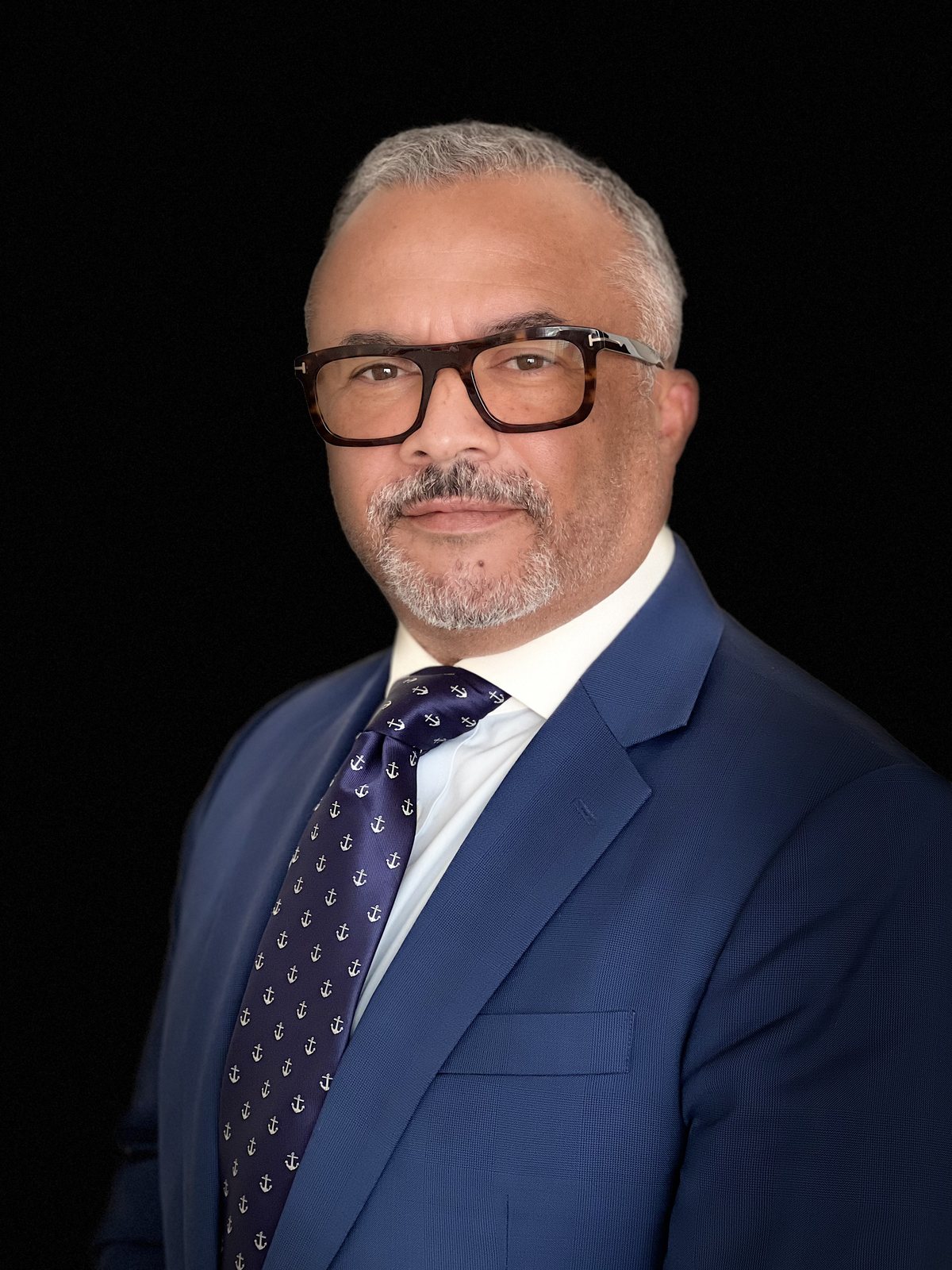
Karl B. Douglas — Chairman & Chief Investment Officer, Covenant.
The through-line
Markets → Risk → Technology → Entrepreneurship → Commodities → Private Equity → Biotechnology → Private Markets → AI
Each phase added a different vantage point on the same problem. The domains changed; the discipline of watching for structural change did not.
01 · Markets
Learning markets from the inside
Karl became a wealth manager at Integrated Resources at the age of twenty-five. It was an early, close-range education in how capital is allocated, how clients think about risk, and how quickly confidence can turn.
The 1987 market crash was a formative experience. Watching a violent repricing unfold in real time left a lasting impression: markets are systems, and systems can move faster than the narratives built to explain them.
02 · Risk
Risk as a discipline, not a slogan
Senior technology roles followed at Bear Stearns (1992–1994), J.P. Morgan & Co. (1994–1998), and Merrill Lynch & Co. (1998–1999)—institutions where risk was measured, priced, and argued over daily, and where the systems that made that possible were themselves being built and rebuilt.
At Merrill Lynch, as a senior strategic technology manager, Karl worked on balance-sheet-risk mitigation technology in the aftermath of the Russian financial crisis and LTCM-era institutional stress. The problem was practical and the lesson was durable: risk is something you can model, structure, and manage, but never fully eliminate.
03 · Technology
Watching the machinery of finance change
Across those years he watched financial computing evolve from mainframe to client-server to cloud. The infrastructure beneath markets was itself an inflection point—one that reshaped what was measurable, tradable, and possible.
Around 2000 he read Michael Lewis’s The New New Thing and was influenced by the stories of Jim Clark and Marc Andreessen. Technology was no longer just a tool for finance; it was becoming the thing worth financing.
04 · Entrepreneurship
Building and leading for the first time
Beginning in December 1999, Karl became Chief Executive Officer and a director of a network technology company, and by 2002 served as President, Chief Executive Officer, and a Director of WARP Technology Holdings. He learned startup capital formation firsthand and pitched venture firms on Sand Hill Road—on the other side of the table from the investors he had spent his career among.
Serving as a first-time CEO was one of the most demanding experiences of Karl’s career. The role provided firsthand exposure to startup capital formation, technology commercialization, leadership, execution risk, and venture financing.
05 · Commodities
Reading a secular trend in the real economy
Karl recognized rising Chinese demand for commodities as a secular trend. From roughly 2003 to 2011 he was involved in coal investing, acquisitions, and consolidation, and then in iron ore and copper investing through approximately 2015.
Hard assets and heavy industry offered a different classroom than trading desks and startups: cycles measured in years, capital structures that could not be unwound quickly, and the unforgiving arithmetic of leverage.
06 · Private Equity
Leverage, capital structure, and adaptation
Through that period Karl learned extensively about leverage, capital structure, risk, and adaptation—often the way such lessons are actually learned, through experience that includes both successes and failures.
These were practical lessons, learned in businesses where capital structures could not be unwound quickly and where adapting to changing conditions mattered as much as the original thesis.
07 · Biotechnology
A new frontier of investable science
In 2015 Karl published biotech investment thinking, extending his attention to a domain where scientific change and capital-market change intersect. Biology was becoming, in its own way, a computational and investable frontier.
08 · Capital & Institutions
Capital, Institutions & AI — 2016–2019
During the following years, Karl wrote extensively about capital structure, institutional sponsorship, family offices and emerging technology. Those themes increasingly converged: who controlled capital, how markets provided access, how financing structure affected outcomes, and how enabling technologies could reshape entire industries. By 2019, he was writing about artificial intelligence and the Fourth Industrial Revolution as an economy-wide investment transition.
09 · Private Markets
Where value increasingly lives
Karl developed private-market and secondary-market investing expertise, and, over time, the Three Trigger Methodology—a framework for judging when structural change has become investable rather than merely interesting.
As more value is created and held in private companies for longer, the questions he had been asking for decades found a new and larger arena.
10 · AI
The Computational Economy
Today Karl serves as Chairman & Chief Investment Officer of Covenant. His current focus is artificial intelligence and what he calls the Computational Economy—the expansion of computation beyond numerical processing into cognition, biology, robotics, and steadily broader areas of economic activity.
It is the same inquiry that began at twenty-five, now pointed at the largest system change of his career.
In the public record
An independent account of Karl’s technology career
In 2003, Karl was interviewed by The Wall Street Transcript as the chief executive of a technology company. The interview documents an earlier chapter of his career—spent managing large-scale technology inside major financial institutions—independent of this site.
- More than 15 years managing enterprise-level technology systems and departments for Fortune 500 institutions.
- Senior technology roles at Bear Stearns, J.P. Morgan, and Merrill Lynch.
- Managed a technology portfolio of approximately $105 million.
- Managed roughly 125 technology professionals at J.P. Morgan.
- Served as Senior Strategic Technology Manager at Merrill Lynch.
- Chief Executive Officer and a Director of WARP Technology Holdings at the time of the interview.
Source: The Wall Street Transcript — Karl B. Douglas, Chief Executive Officer, WARP Technology Holdings (2003).
The emphasis throughout has been on learning and on evolving a process—one built to acknowledge that experience includes both successes and failures.