Investor · Strategist
Karl B. Douglas
Student of consequential change.
I study technological, economic, and capital-market inflection points—looking for patterns that reveal when structural change is becoming investable.
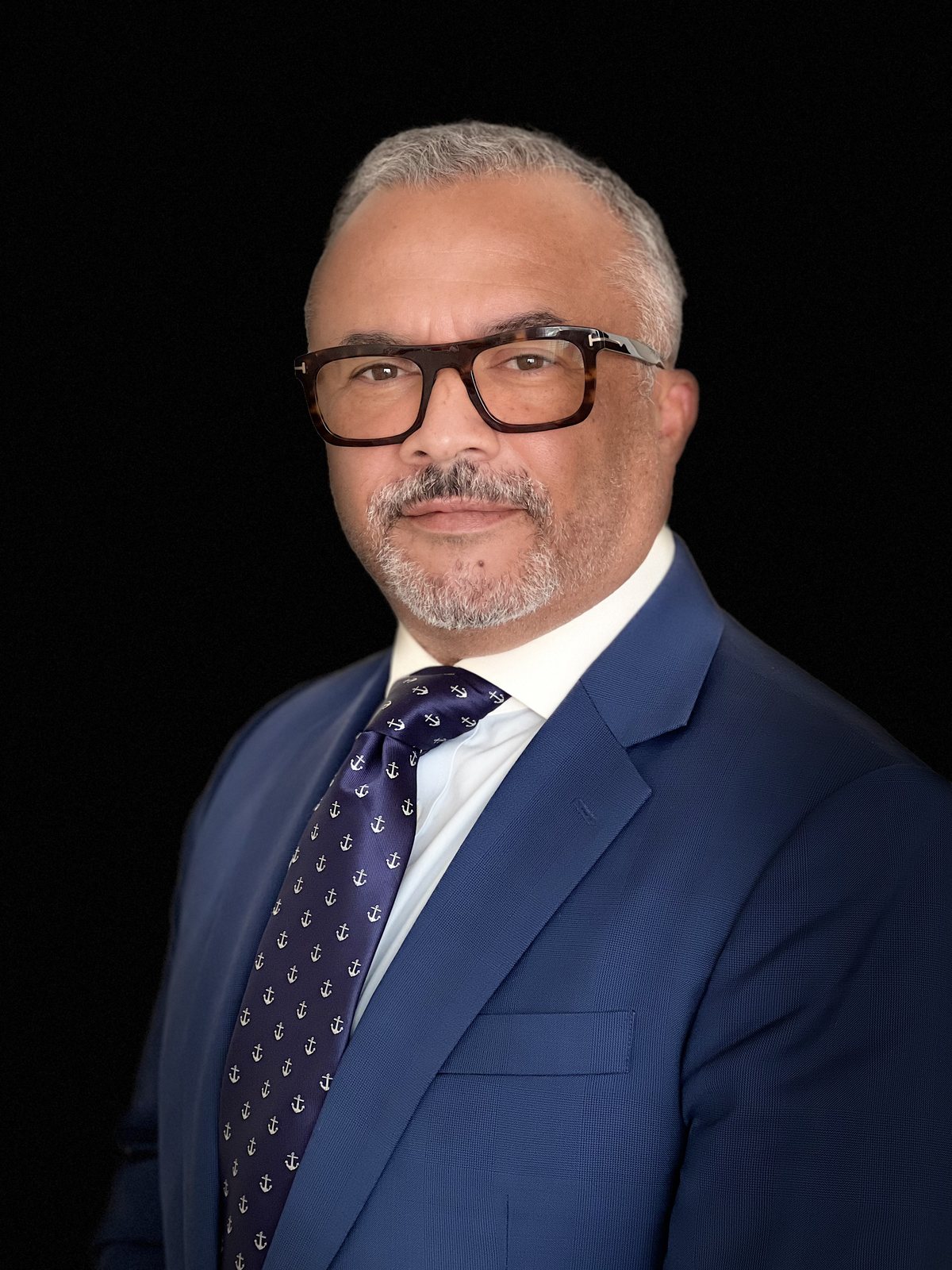
Four decades near consequential change
For four decades, I have worked across markets, technology, private capital, and investment management—often at moments when established systems were beginning to change. That experience has shaped the way I invest today: look for consequential shifts in technology, capital flows, market structure, and institutional behavior, then wait for enough observable evidence that the probability distribution has moved in your favor.
My work today is focused on identifying those inflection points and understanding how structural change translates into risk, value, and investable opportunity.
A way of seeing
How I Look for Change
Structural change rarely announces itself. I watch it move through a sequence—from raw capability to the point where it reorganizes an industry and becomes investable.
Technology
A capability improves fast enough to change what is possible.
Capital
Money begins to move toward the change—often quietly, then in size.
Institutions
Credible, sequential commitment signals the shift is being taken seriously.
Market Structure
The economics of an industry—who wins, who pays—start to reorganize.
Investable Inflection Point
The moment the change is observable, validated, and structural—no longer a forecast, and not yet consensus.
Start here
Featured Thinking
Biotech Investing — Eleven Years Later
Eleven years after Biotech Investing — Five Basic Questions to Ask, a retrospective on what the 2015 thesis got right and missed, and an emerging thesis: AI may change the organization and economics of drug development, not just the science.
Biotechnology · Oct 6, 2026 · 12 min read
Anthropic and the $30 Trillion Question
Anthropic's >$30 trillion TAM is best understood as AI-addressable economic activity, not forecast revenue. A framework for valuing intelligence—from run-rate multiples and gross margins to trust, commoditization, and the AI value chain.
Artificial Intelligence · Aug 27, 2026 · 14 min read
Recognizing Change Before It Becomes Consensus
A foundational essay explaining pattern recognition, evidence, convergence, and how I approach major inflection points.
In development
The Three Trigger Methodology
A risk-reduction and opportunity-screening framework for identifying private-market opportunities using observable institutional validation rather than pure forecasting.
Private Markets
How I Think
Investing is not primarily about predicting the future. It is about recognizing when observable evidence suggests that the future is changing. I look for converging technologies, shifts in capital, institutional validation, and structural forces that can alter the economics of an industry or market.
Pattern Recognition
Recognizing structural change through repeated exposure to technological and market transitions.
Evidence Over Prediction
Acting on observable evidence that the future is changing rather than forecasting an uncertain event.
Convergence as Catalyst
Watching for independent technologies and forces that converge to alter an industry’s economics.
Institutional Validation
Treating sequential, credible institutional commitment as a meaningful signal.
Access as an Investment Skill
Gaining entry to elite opportunities—often through private and secondary markets—is itself a discipline.
Risk Decomposition
Separating a thesis into its component risks—management, product, financing, and structure.
Adaptability
Adjusting process as market regimes change, without abandoning conviction prematurely.
Patience
Waiting, once a thesis is sufficiently validated, for structural forces to play out.
Recognizing change before it becomes consensus.
The value of an idea is highest in the window between when the evidence is observable and when it becomes obvious to everyone. That window is where I do my work.
Historical provenance
From the Archive
Dated theses, preserved intact, that trace how the thinking evolved—from computational change in biotechnology, to the role of capital and institutional sponsorship, to artificial intelligence as an economy-wide transition.
When computation began changing drug discovery
Biotech Investing: Five Basic Questions to Ask
Read the thesis 2017 · Institutional SponsorshipWhy who invests can matter almost as much as what they invest in
Raising Capital in the Microcap Market: 7 Success Factors for Achieving Significant Capital Raise Objectives
Read the thesis 2019 · Artificial IntelligenceWhy AI looked like an economy-wide platform before it became consensus
Family Offices are Investing Heavily in Artificial Intelligence: Here are Five Reasons Why
Read the thesisA Career Shaped by Inflection Points
From the 1987 market crash to institutional balance-sheet risk, technology entrepreneurship, commodity cycles, biotechnology, private markets, and artificial intelligence, my career has repeatedly placed me near systems undergoing consequential change. The common thread has been learning how to recognize those transitions—and how to allocate capital around them.
1987
Market Crash
Early career as a wealth manager; the 1987 crash became a formative lesson in market risk and nonlinear repricing.
1992–1998
Technology Inside the Banks
Senior technology roles at Bear Stearns (1992–1994) and J.P. Morgan & Co. (1994–1998), managing enterprise-scale systems for the institutions where risk was priced daily. At J.P. Morgan, Karl managed roughly 125 technology professionals and a technology portfolio of approximately $105 million.
1998–1999
Balance-Sheet Risk & Technology
At Merrill Lynch & Co., as a senior strategic technology manager, worked on balance-sheet-risk mitigation technology in the aftermath of the Russian financial crisis and LTCM-era institutional stress.
1999–2003
Technology Entrepreneur
Beginning in December 1999, served as Chief Executive Officer and a director of a network technology company, and by 2002 as President, Chief Executive Officer, and a Director of WARP Technology Holdings—learning startup capital formation firsthand and pitching Sand Hill Road venture firms.
2003–2015
Super Tanker Trades / Commodities
Recognized China’s industrial expansion and structural commodity demand. Developed the concept of “Super Tanker Trades.” Invested across coal, iron ore, and copper, and learned private-equity investing through consolidation of coal companies.
2015
Biotechnology & Computational Convergence
Published on how high-throughput screening, bioinformatics, genome sequencing, and cheap compute were changing drug discovery.
Private Markets
Private Markets & Secondaries
Developed experience using secondary markets to gain access to elite private companies and institutionally validated opportunities.
Methodology
Three Trigger Methodology
Formalized a repeatable framework emphasizing observable institutional validation.
Now
AI & the Computational Economy
Current focus on AI, compute, robotics, biological intelligence, infrastructure, and the broader transition toward a computational economy.
Latest
Biotech Investing — Eleven Years Later
Eleven years after Biotech Investing — Five Basic Questions to Ask, a retrospective on what the 2015 thesis got right and missed, and an emerging thesis: AI may change the organization and economics of drug development, not just the science.
Anthropic and the $30 Trillion Question
Anthropic's >$30 trillion TAM is best understood as AI-addressable economic activity, not forecast revenue. A framework for valuing intelligence—from run-rate multiples and gross margins to trust, commoditization, and the AI value chain.
Covenant
Karl is Chairman and Chief Investment Officer of Covenant, where his investment philosophy informs the firm’s work across wealth management, private markets, and technology-oriented investing.